 Tiffany Munro
Carmen: Maps and Illustrations from Our Original Setting
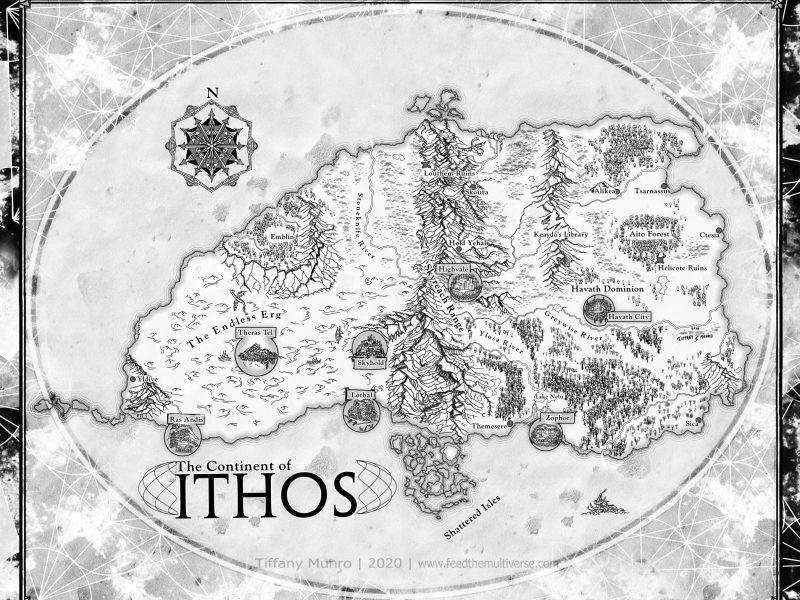
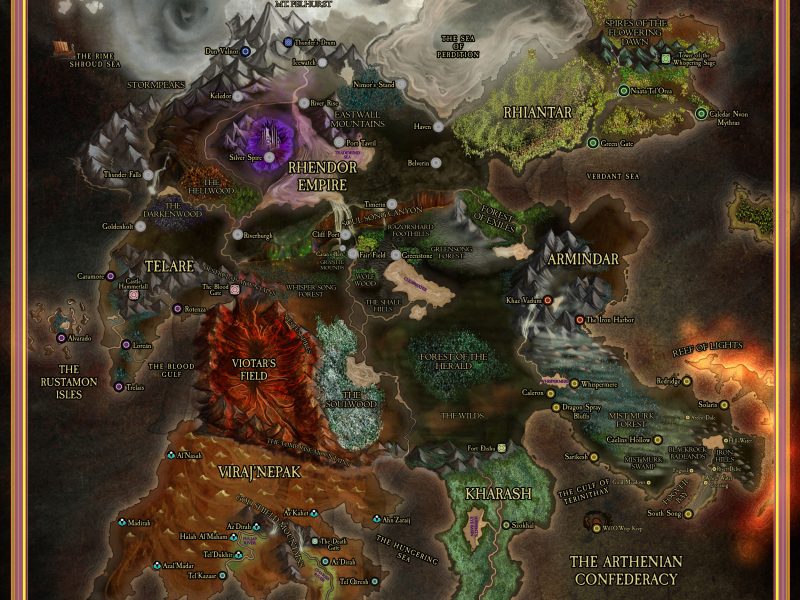
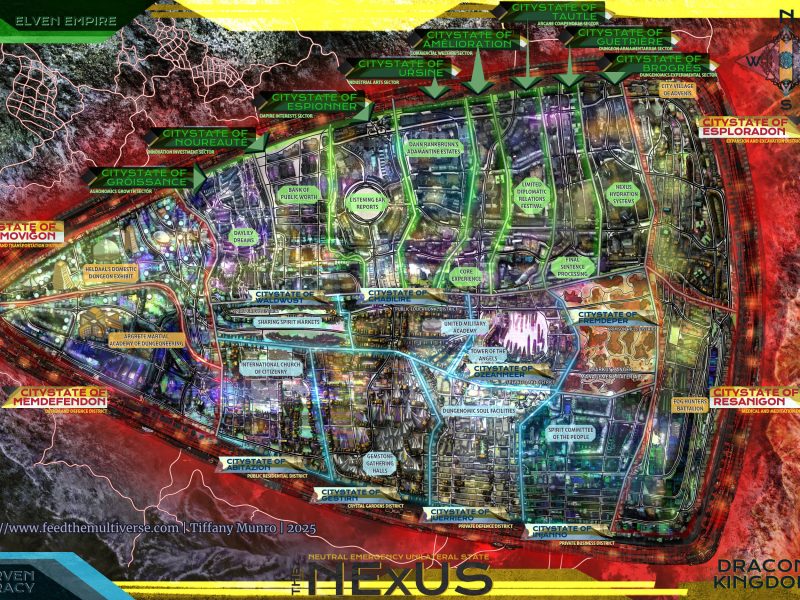
Carmen is not a client project. It is one of mine and J’s original settings, which means it has accumulated art in the natural manner of a long-running imaginary world: not as one tidy package, but as maps, characters, political diagrams, decorative objects and scenes created whenever the story suddenly demands that we know what something looks like.
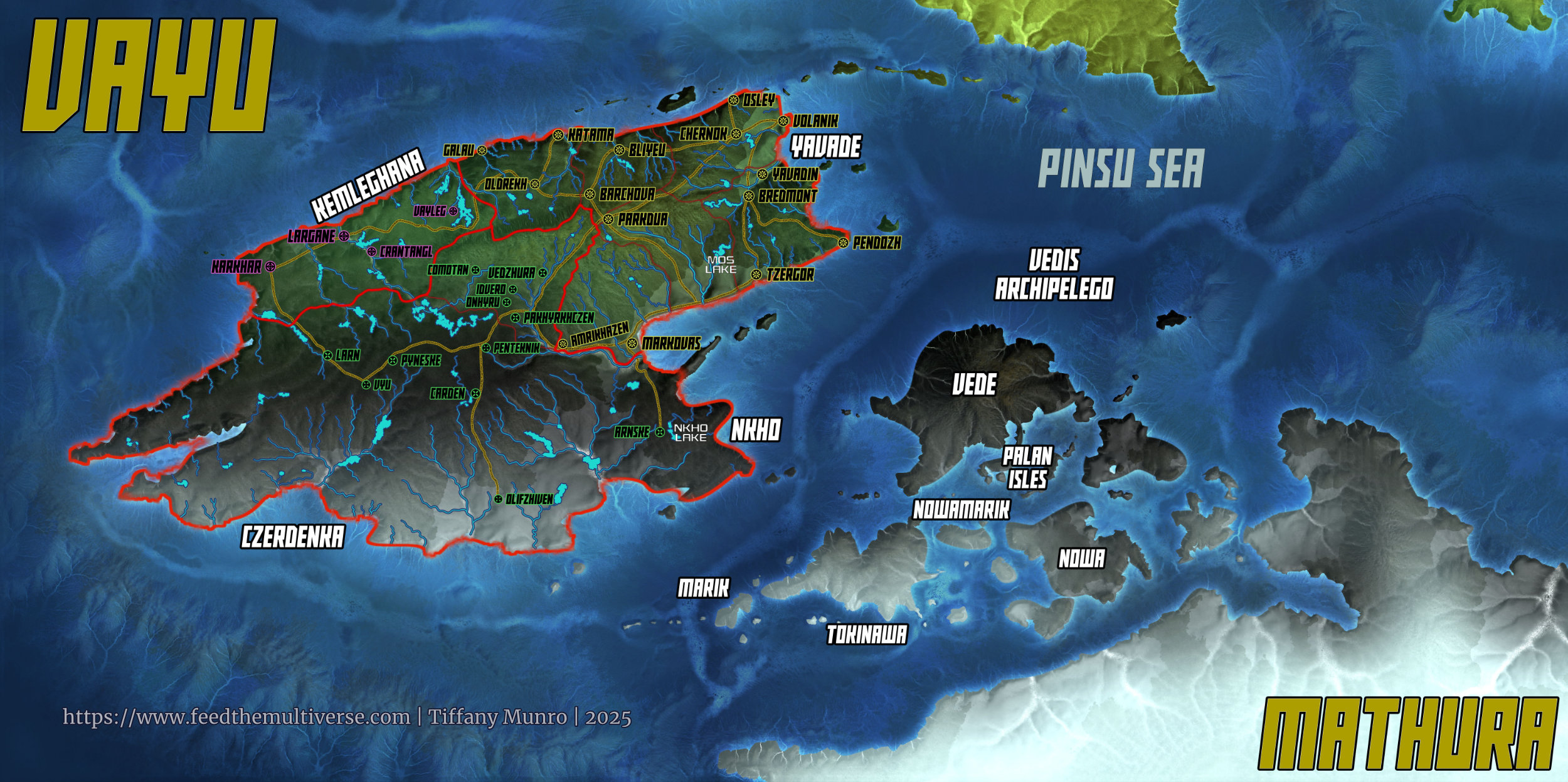
The Vayu map is the broad regional piece in this group, built to make the island geography legible as a place rather than just a backdrop. The Opic and Anad map approaches the setting from a much nerdier direction, layering political boundaries with watersheds because at some point I decided fictional drainage basins were plot-relevant. This is what happens when the cartographer is also one of the writers. There is nobody in the room to stop me.
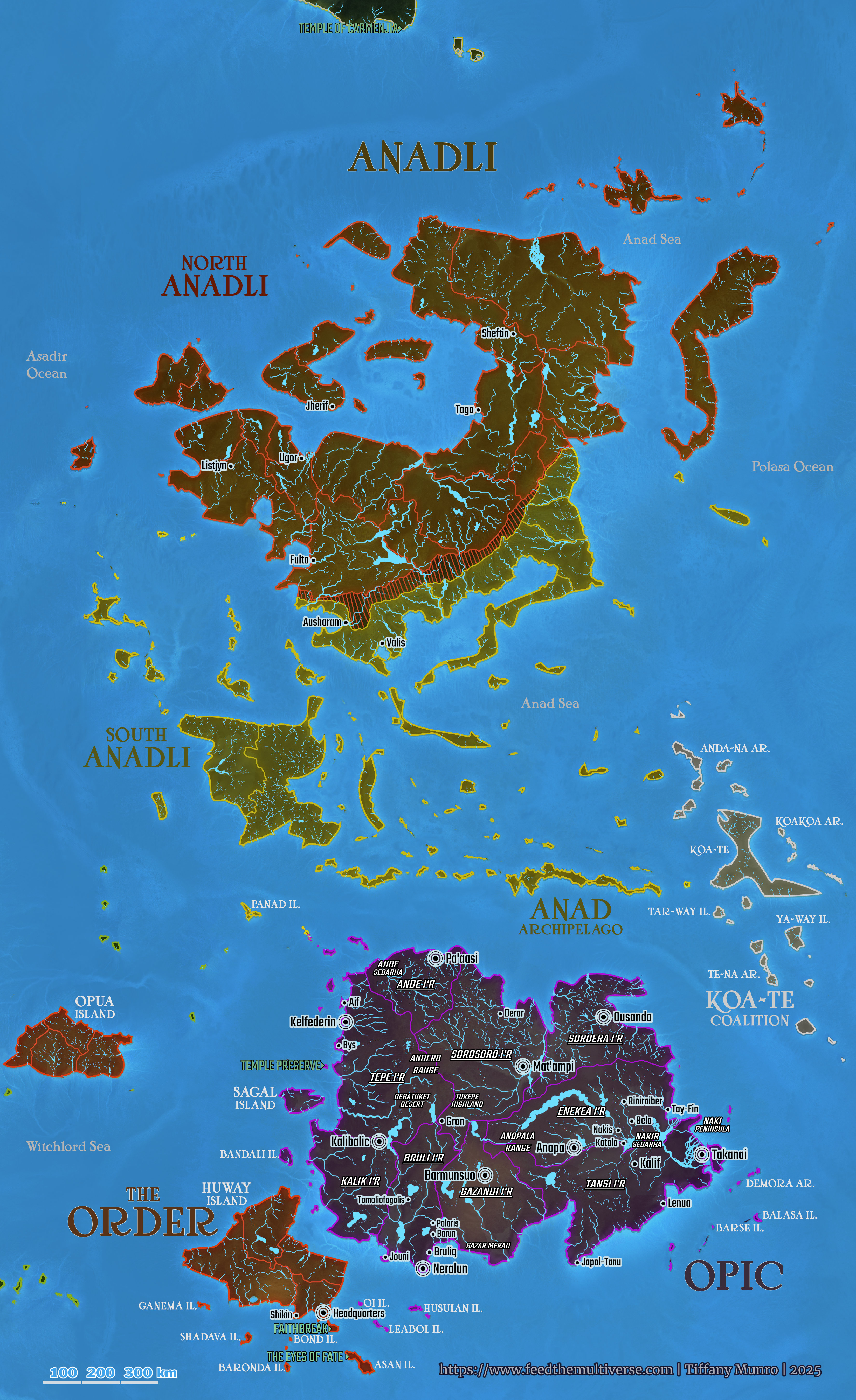
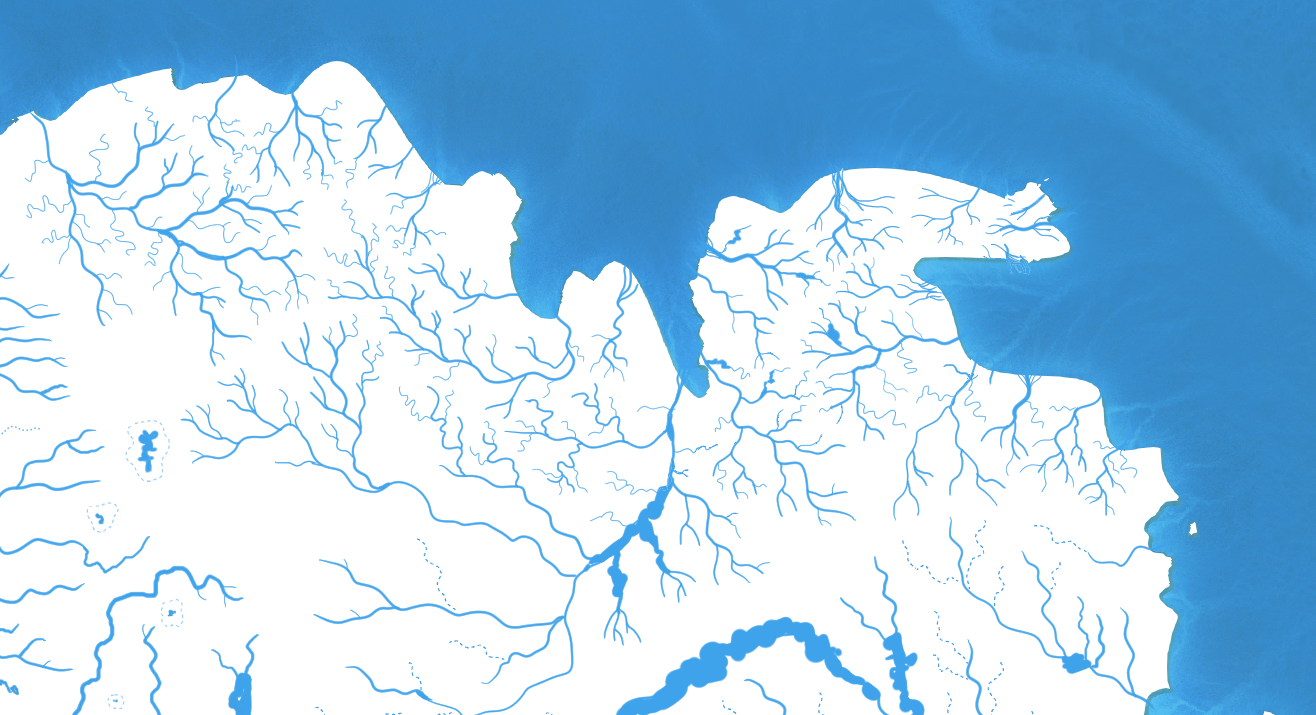
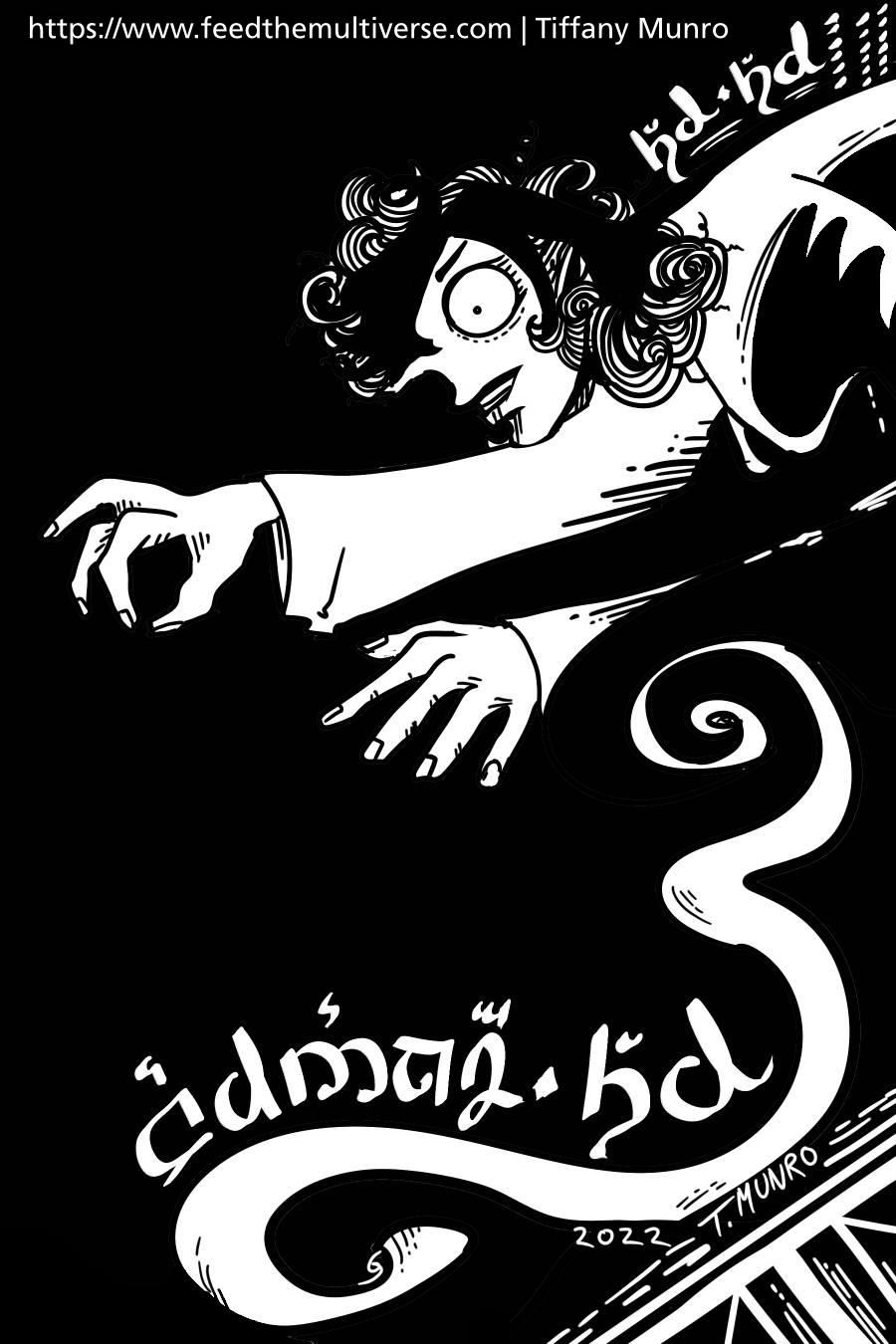
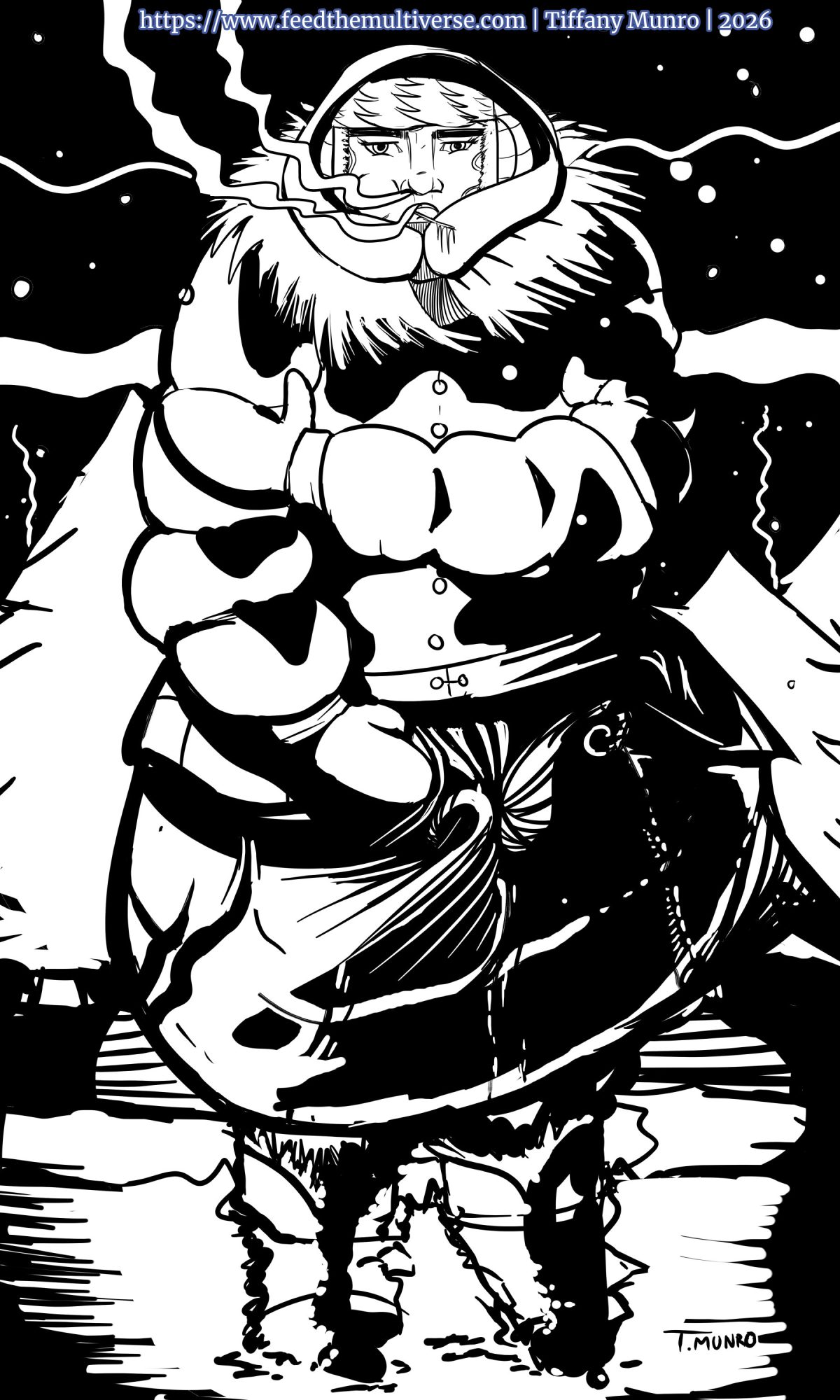
Other pieces are less interested in cartographic respectability. “Tour Carmen” turns the map into a decorative travel artifact framed by coiling figures. Carmenjia is graphic setting art. Kien and Thiela give the world faces instead of borders, while Lasa Naki and the Nakir River illustrations are about weather, place and atmosphere rather than orientation.
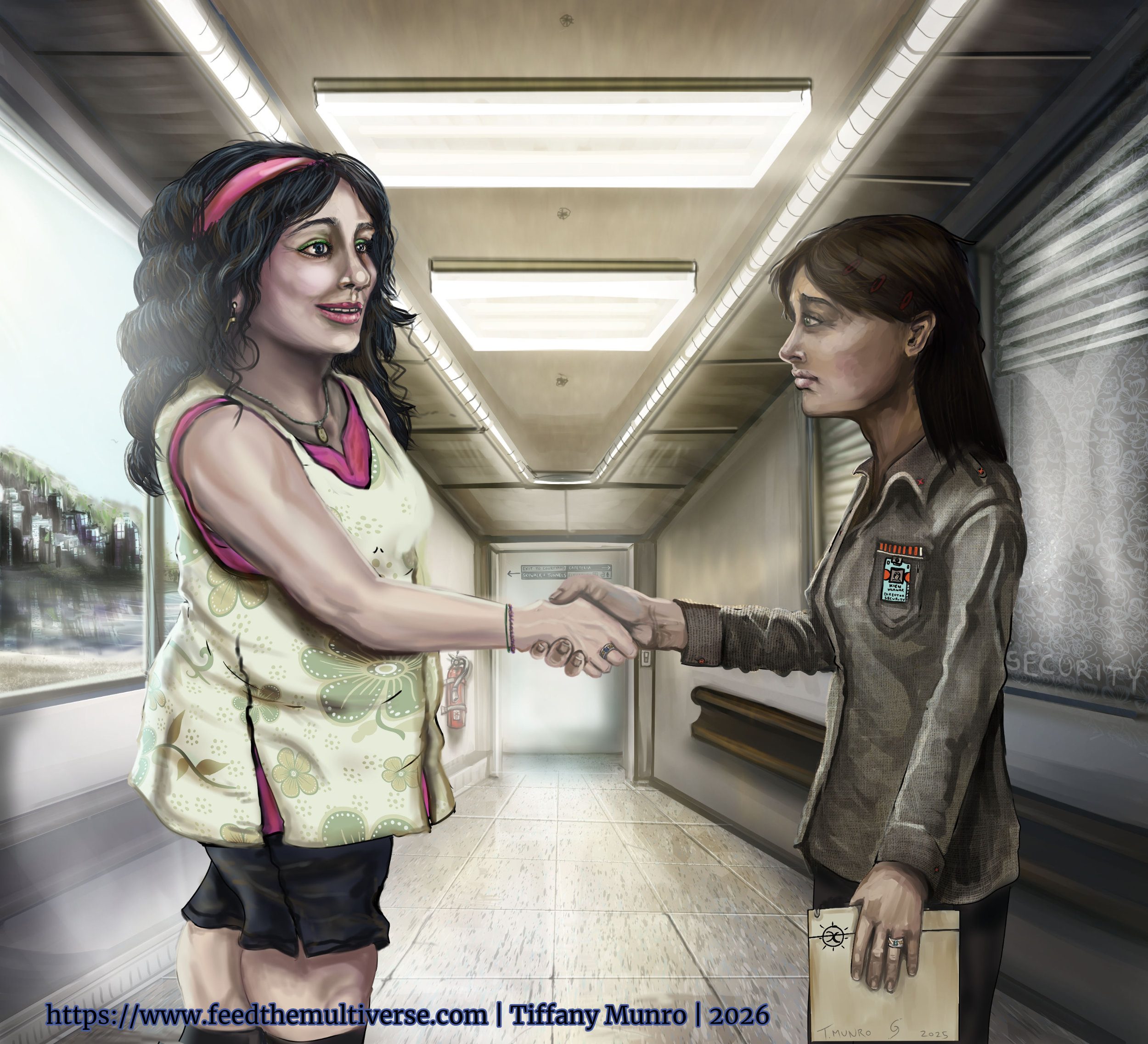
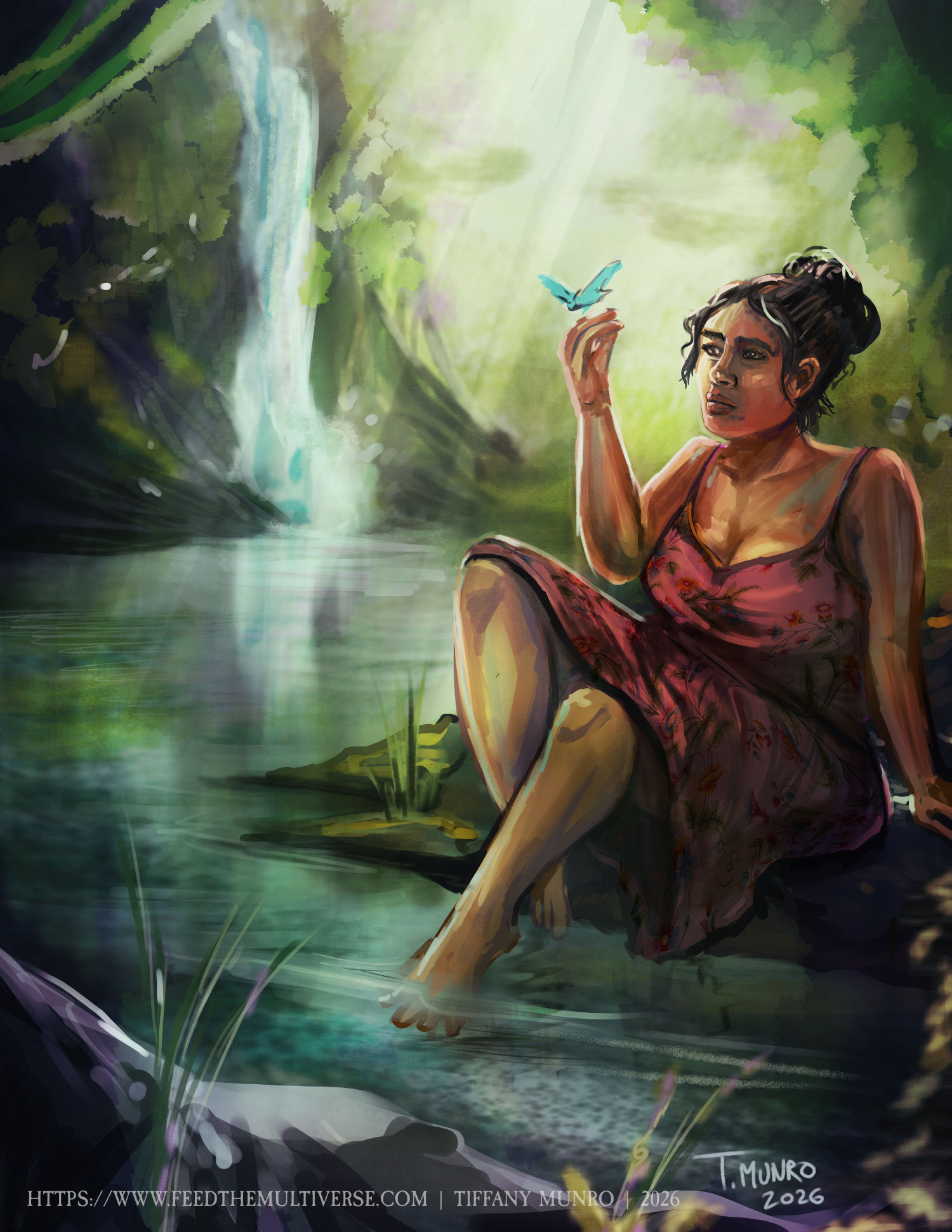
I like having these pieces together because they show what worldbuilding art actually looks like over time. A setting is not only its “main map.” Sometimes it is the watershed map, the propaganda-ish travel graphic, the snow on somebody’s coat, or the exact riverbank where a scene finally became real enough to draw.
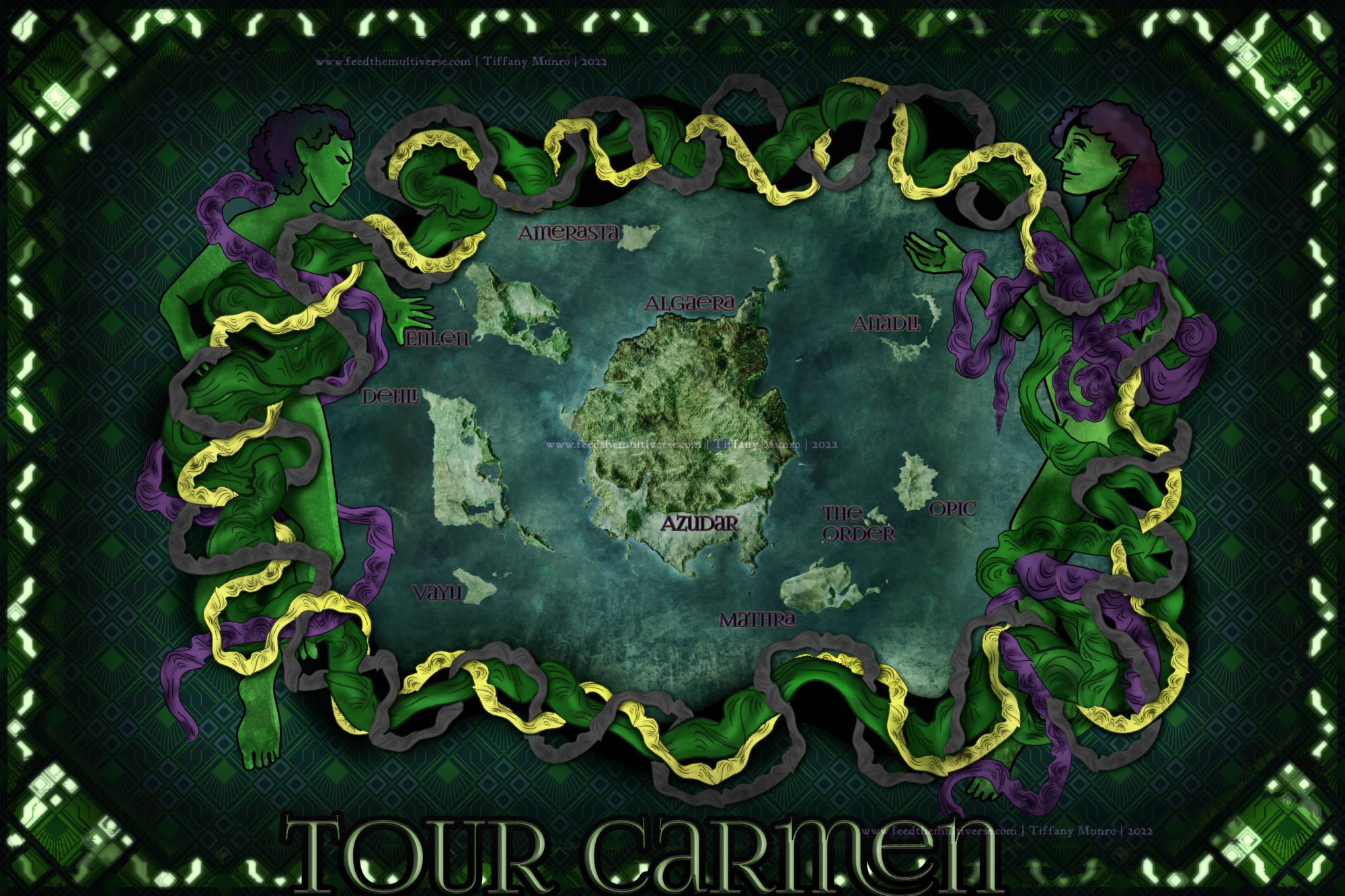
Tour Holy Carmen Cruise Map TOUR IT EVEN MORE
Go visit its lovely temples and perhaps buy a burger?!
Regions of the Planet Carmen, Holy Places of Lady Fate and her Sister’s BURGER EMPIRE
I even wrote a sea shanty from the POV of the Opicians!
Read Opician Sailor or listen to it (disclosure: AI generated music) (not AI generated lyrics, I wrote this poem thank you very much)
[verse 1]
He married a farmer and he did his share;
Till, seed, weed and wait; it began to wear
Water whispered his fate, the farm held barely a prayer
For the sea’s bright horizon promised mysteries out there
He’d go, bring back gold, vowed he’d take great care
“Beware!” she warned, “crossing’ll damn you to roam”
“If Death sees you, you’ll never feel home”
[pre-chorus]
The world tree stretches its fingers towards the sun
And never quite manages to reach
Home again
The one at sea alleges after this winter aboard he’s done
And never quite manages to reach
Home again
[chorus]
Till the topsoil
Burn your whale oil
Don’t let your sea legs spoil
Yearning for her tempting roil
The woman you adore,
Though grief she foresaw,
The reef promises you more
When you return to its claws
So let your sails uncoil
Your sea demands your toil
[verse 2]
He dares sail past the island of the dead
Tells the hair raising tale of how he held fast, never fled
The sailor in spine-tingling dread
Starts dreaming about the farmstead
He finds himself on the land once more
A week later wonders why he came back to shore
[pre-chorus]
The world tree grows long branches towards the sun
Though its roots drink deep and long is the day
Night again reigns
The one at sea knows his long years aboard are done
But never quite manages to say
I’m home, amen
[chorus]
Till the topsoil
Burn your whale oil
Don’t let your sea legs spoil
Yearning for her tempting roil
The woman you adore,
Though grief she foresaw,
The reef promises you more
When you return to its claws
So let your sails uncoil
Your sea demands your toil
[bridge]
When the wind blows
Again will he go
Borne across the sea
He sails at the break of dawn
Once again her lad is gone
E’re his lady love
Knows no gods above,
Prays to Death below,
Bring me no woe,
Let him sail through,
Let his wind blow true,
“Come back to me, return him to me,
I will give you my soul,” promised she
[chorus]
Till the topsoil
Burn your whale oil
Don’t let your sea legs spoil
Yearning for her tempting roil
Though now you farm,
By the fire you warm,
When Death saw your face,
She levied a toll
You ran from that place
From her isle, she let you go
So always your sails uncoil
Your sea demands your toil
[Outro]
He never stays long enough to learn the dreadful cost
For the legions he crossed, his wife’s soul was lost
She paid Death’s price
For his search for paradise
Which he never quite manages to find
No matter who he leaves behind
[verse reprise]
One fateful day he crosses the threshold
Bearing great riches, treasures and gold
He finds the homestead fire gone cold
Though the price went untold,
His wife fulfilled her oath
In the end Death will welcome them both
WE CAN OVERTHINK THIS EVEN MORE NO ONE WILL STOP ME THIS IS MY SETTING
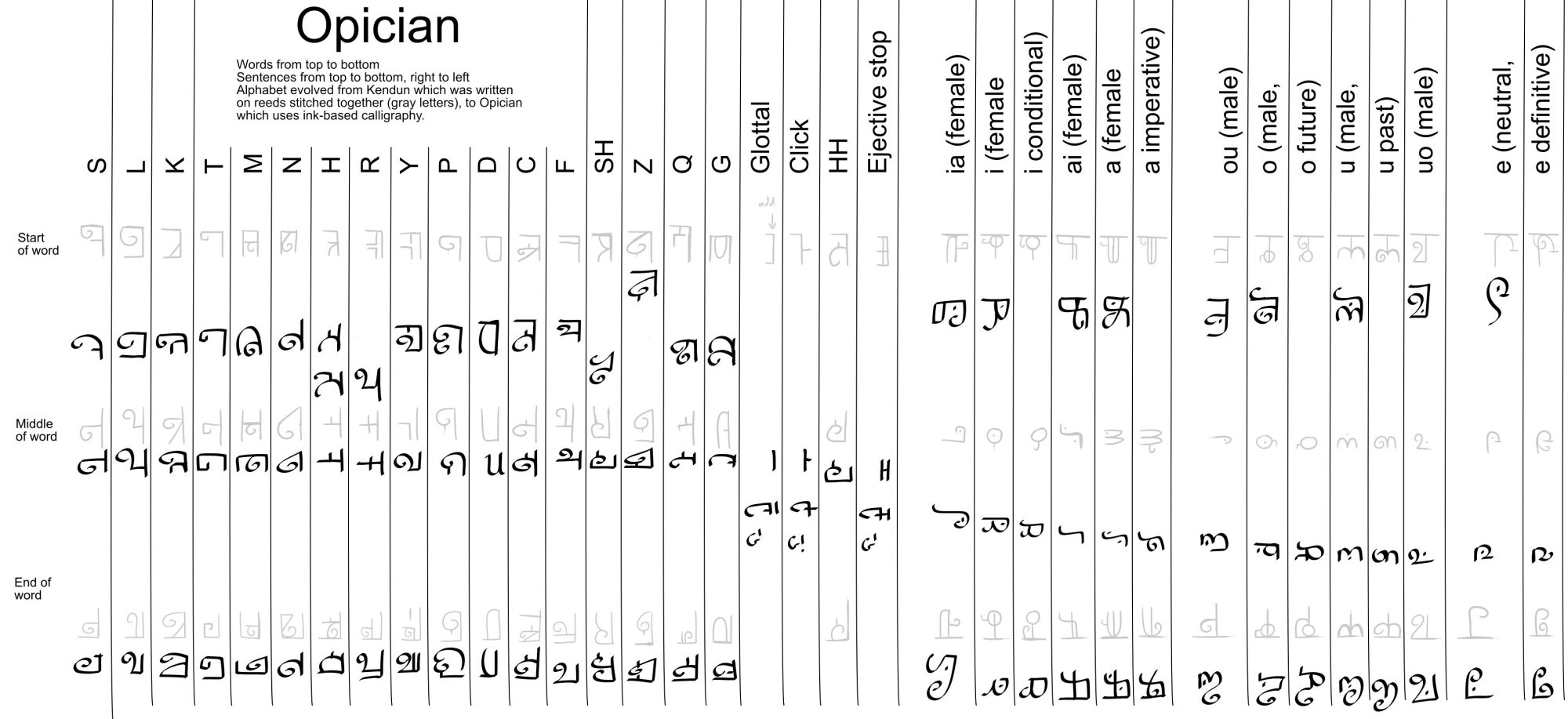
THERE’S A CONLANG YOU CAN LEARN SOME OPICIAN WORDS
| I | na, nu |
| You (subject) | sha, shu, shen (you all) |
| She/he/they (singular third person pronouns) | tepa, tepu, tepe |
| If you want to informalize pronouns, like you’re talking to a child, reduplicate | nene (I), sheshe (you), tepapa (she), tepupu (he), pepe (it) |
| It | pe |
| We | na`en / nu`en |
| They (a group of people of mixed gender) | `tepen (mixed group) |
| They (a group of women) | `tapi |
| They (a group of men) | `toupu |
| father | papu |
| mother | mami |
| step parent | he- (hema, hepa) |
| aunt (mother’s older sister) | folimi |
| uncle (dad’s older brother) | tolopo |
| aunt (father’s older sister) | folipa |
| uncle (mother’s older brother) | tolomo |
| aunt (mother’s younger sister) | fulimi |
| uncle (dad’s younger brother) | tulopo |
| aunt (father’s younger sister) | fulipa |
| uncle (mother’s younger brother) | tulomo |
| sister, older | foli |
| brother, older | tolo |
| sister, younger | fuli |
| brother, younger | tulo |
| Woman of the house | fahala |
| Woman | hali |
| Man | bulo |
| Boss woman | fa`kai |
| Boss man | ba`koti |
| who | tepeleh (…) ye |
| what | peleh (…) ye |
| when | pepoloh (…) ye (when will it be in the future) pepulu (…) ye (when was it in the past) |
| where | beleneh (…) ye |
| why | ciriraleh (…) ye |
| too / also | ail |
| and / with | ti |
| that thing | pelemi |
| this thing | pelame |
| no | li |
| yes | pai |
| why (but not as a question) | cirir |
| where (not as a question) | belen |
| who (but not as a question) | tepe |
| what (but not as a question) | pele |
| how | palireh (…) ye |
| how (but not as a question) | pale |
| like (comparison) | nait |
| negation | li’ (…) e’le (rising tone) |
Ti, why have you done this have you not gone far enough
NO, I TRANSLATED THE SONG (well some of it) INTO KALIK AND THEN IPA
[Verse 1]
t̪epu Sepäri rud t̪i peʡ t̪epu so̞meneho̞d
Hep, ren, sep, t̪i det̪inesi; pe lo̞ho̞so̞sudo̞
peʡ nerʡ luhu, änu hegidänlo̞ʃun, sä päläsemen ʡʜihigäqɪs hud
Räh peʡ häs häsemen äʡ ʃel ʡʜo̞liro̞do̞ lo̞äʡʜedɪs päläpeʡ l
t̪epuperä θel, eʡʜepel sät̪ähule, ʡʜelɵlupu ro̞pä zulet̪el
“Lät̪älät̪äp! peʡ ʃu dekxɵlupu zezidän o̞h sekxeʝiro̞do̞,” t̪epä hugät̪äp,
“peʡ ʃu θehehin ʝeselɪs, Ire ʃu Degägäre nälät̪äp.”
[pre-chorus]
ulhe kxäʡ her päluliq kxʡ pe kxʡ iʝet̪en gel lo̞h päläʃäl
t̪e qero̞rehän gel
pälʡ en depär
ɪro̞ äme ezhɪ, set̪ pälähäso̞pi häsu pälähäsepur
t̪e qero̞rehän gel
pälʡ en depär
[chorus]
Hep sä hänuhe
qädedät̪ peʡ t̪epu pedikx kxekxu ner merän
θeledelo̞ θeleʃ peʡ t̪epu ululen kxɪkxi häs
t̪ʡ leh t̪epä deregehere zemimihire, t̪epu qiʃiren
Sä häli ʃu qesäqɪs
Hezi t̪epäso̞ʡʜi nulihire penɪs
ɪn o̞h ʃu θɪlo̞ ʡʜeleheren
pepo̞lo̞h ʃu o̞h kxʡ pe kxʡ aʝɵ po̞leludo̞ ʝe
Hɵ peʡ ʃu ‘o̞ kxʡ heso̞pi θeled ʝe
peʡ ʃu häs peʡ ʃu ʝesɪs märät̪än
[verse 2]
t̪epu se häʡ ɵlo̞s kxäʡ her degägäre sekxeher hesinesi
t̪epunɪt̪ sekxehere änsuäkxän, t̪epu hudule, liʡ seruʝule eʡ le
Su häsunäru, sekxʡ ele, ɵsɪkx θeθesehere
ɯl sä päläsep t̪epuso̞ʡʜi meʝeher
ɪʡ än ɵd, t̪epu qereleher leh t̪epuperä hän se hänɵʡ he
se mupei o̞peʡ ɪlä, qiriräleh pelelinesi räh lo̞semen ʡʜo̞däqɪs ʝe
[pre-chorus]
ulhe kxäʡ her päluliq kxʡ pe ses sɵn lo̞h päläʃäl
Eʃän ʝekx se hesɵn, t̪i pei ileile päl
Depär so̞peʡʜi ʃäräneher
Häsuän päl häs, peʡ t̪epu ilʡ pän ileile pɵset̪i husule, t̪eput̪ɪni
Er liʡ heg eʡ le, älɪ
äʝä, nu pälʡ en pel
[chorus]
Hep sä hänuhe
qädedät̪ peʡ t̪epu pedikx kxekxu ner merän
θeledelo̞ θeleʃ peʡ t̪epu ululen kxɪkxi häs
t̪ʡ leh t̪epä deregehere zemimihire, t̪epu qiʃiren
Sä häli ʃu qesäqɪs
Hezi t̪epäso̞ʡʜi nulihire penɪs
ɪn o̞h ʃu θɪlo̞ ʡʜeleheren
pepo̞lo̞h ʃu o̞h kxʡ pe kxʡ aʝɵ po̞leludo̞ ʝe
Hɵ peʡ ʃu ‘o̞ kxʡ heso̞pi θeled ʝe
peʡ ʃu häs peʡ ʃu ʝesɪs märät̪än
Looking for a custom map? Character art? Conlang? Conscript? Magic system? You name it, I make it.
I create custom fantasy maps, science-fiction maps, book maps, regional cartography, and world-building artwork for games, books, and personal settings. If you have a world that has escaped the notebook and now demands MORE GEOGRAPHY! … contact me for a quote.
© Tiffany Munro. All rights reserved.